Number Writing Practice Number Tracing 1: A Smart Start for Early Math Confidence
Learning to write numbers isn’t just about forming shapes on paper—it’s the first real step into logic, structure, and confidence in early learning. For children ages 2 to 4, especially those beginning kindergarten prep or easing into preschool routines, Number Writing Practice Number Tracing 1 serves as a gentle, effective bridge between seeing a number and owning it—mentally and physically.
Why Tracing “1” First Makes Developmental Sense
Starting with the number 1 is more intentional than it may seem. It’s the simplest numeral to form—just one vertical stroke—and carries minimal motor demand. That simplicity matters deeply for little hands still building fine motor control, hand-eye coordination, and pencil grip stamina. When a child successfully traces “1” with consistency, they experience immediate success. That win builds motivation to try “2”, then “3”, and so on.
This foundational moment is where Number Writing Practice Number Tracing 1 shines—not as busywork, but as purpose-built scaffolding. Each line guides finger movement, reinforces left-to-right orientation (critical for later reading), and introduces directional language like “start at the top” and “pull down.” These aren’t abstract instructions; they’re physical cues that become internalized muscle memory.
What’s Inside the PDF: Designed for Real Use, Not Just Printing
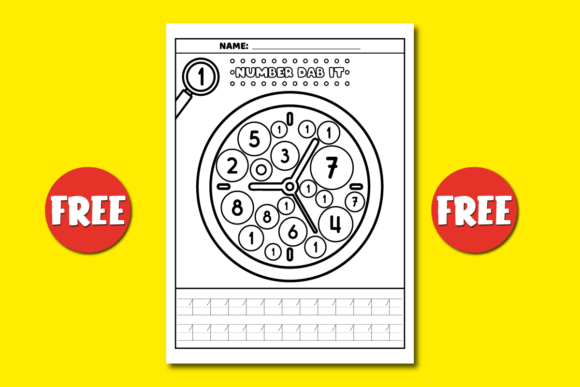
The Number Writing Practice Number Tracing 1 resource includes one ready-to-use PDF file, sized precisely at 8.5 x 11 inches—the standard letter size used in most home printers, classroom copiers, and learning centers. No resizing. No cropping. Just open, print, and go.
But what truly sets this apart is that it’s Fully Editable in Adobe Illustrator (AI). That means educators, therapists, homeschooling parents, or curriculum designers can customize it without starting from scratch. You can:
- Add your student’s name or classroom logo
- Adjust line thickness or spacing for different skill levels
- Swap fonts to support specific handwriting models (e.g., D’Nealian or Zaner-Bloser)
- Insert visual cues—like colored arrows or dotted start/stop dots—for extra clarity
- Layer in high-contrast backgrounds for learners with visual processing needs
This level of flexibility makes it far more than a static worksheet—it becomes a living tool, adaptable across settings: a quiet corner in a preschool, a therapy session with an occupational therapist, or even a travel-friendly activity during car rides or waiting rooms.
Where This Fits in Everyday Learning Routines
You’ll find Number Writing Practice Number Tracing 1 working quietly—and powerfully—in many common early learning contexts:
Number Recognition Games for Preschoolers
Use the traced “1” as a visual anchor during games: hold it up while singing “One, Two, Buckle My Shoe,” point to it when counting one toy, or tape it to a sensory bin lid labeled “1 scoop only.” Repetition + context = recognition that sticks.
Identifying Numbers for Child — Beyond Flashcards
Flashcards teach naming—but tracing teaches *knowing*. When a child traces “1” while saying “one,” they link sound, symbol, and motion. That multisensory connection strengthens neural pathways more effectively than passive identification alone. It’s why teachers often pair tracing with verbalization and tactile tools like sandpaper numbers or pipe cleaner bending.
Tracing Worksheet for Kindergarten Ages 2–4
Yes—ages 2–4. Don’t assume “kindergarten worksheet” means only for 5-year-olds. Many 2- and 3-year-olds are ready for guided tracing if the format supports them. This version uses wide, clear lines, generous spacing, and uncluttered layout—no distracting clipart or competing visuals that dilute focus. It respects short attention spans while honoring developmental readiness.
Backpack Coloring Book for Children Ages 3–5 & School Coloring Pages for Preschooler
Coloring isn’t just fun—it’s functional. The same PDF can double as a coloring page: outline the number “1” in thick black, leave white space inside, and invite kids to fill it with patterns, stickers, or crayon swirls. This reinforces shape awareness while building hand strength. Pair it with backpack-themed elements—tiny apples, pencils, or school buses—and you’ve got a personalized “Back to School” keepsake that doubles as skill practice.
Back to School Dotting Activities: A Natural Extension
Dot-to-dot isn’t just for big numbers. A simple “1” dotting page—two dots connected by a single line—builds pre-writing fluency before full tracing begins. It’s perfect for toddlers testing pencil control or children who get overwhelmed by continuous strokes. With Number Writing Practice Number Tracing 1, you can easily adapt the AI file to create custom dotting versions: place three dots (top, middle, bottom) and label them “Start → Middle → Stop.” Then let the child connect them—building sequencing, planning, and precision all at once.
Practical Tips for Getting the Most Out of This Resource
Here’s how real families and educators make Number Writing Practice Number Tracing 1 work daily:
- Keep it short and joyful. Two minutes of focused tracing beats ten minutes of resistance. Celebrate effort—not perfection.
- Rotate tools. Try jumbo crayons, washable markers, finger paint, or even tracing over the sheet with a dry-erase marker on a laminated copy. Novelty sustains engagement.
- Anchor it in real life. After tracing “1,” ask: “Where do we see ‘1’ today?” A single shoe? One apple at snack? One friend waving hello?
- Pair with movement. Draw a giant “1” on the sidewalk with chalk. March while drawing it in the air. Clap once while saying “one.” Kinesthetic reinforcement deepens retention.
- Revisit—not replace. Don’t rush to “2” after one session. Reuse the same sheet across days. Familiarity breeds confidence.
Who Benefits Most—and Why
This isn’t just for kids who love coloring or sit still for long stretches. Number Writing Practice Number Tracing 1 supports diverse learners:
- Children with emerging fine motor skills—the wide lines and clean design reduce frustration.
- Visual learners—clear structure and spatial layout help decode symbol formation.
- English language learners—few words needed; meaning lives in the shape, direction, and action.
- Parents seeking screen-free, portable learning—no batteries, no updates, no Wi-Fi required.
It also fits seamlessly into broader goals: early intervention plans, IEP accommodations, summer learning loss prevention, or simply giving a curious 3-year-old something meaningful to do while older siblings do homework.
Final Thought: Small Strokes, Big Foundations
In a world of fast-paced digital apps and flashy learning toys, there’s enduring value in the quiet act of tracing “1.” It’s where math begins—not with equations, but with intention. Not with speed, but with stability. Not with performance, but with presence.
Number Writing Practice Number Tracing 1 doesn’t promise overnight mastery. What it does offer is consistency, clarity, and care—wrapped in an 8.5 x 11-inch PDF that’s as practical as it is purposeful. Whether you're preparing a child for kindergarten, reinforcing number sense in preschool, or looking for a calm, constructive way to welcome the new school year, this resource meets you where you are—and helps you move forward, one steady stroke at a time.