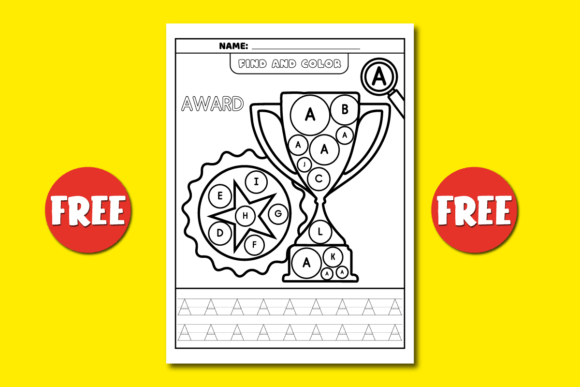
Alphabet Handwriting a Letter Tracing: A Strategic Asset for Early Learning Designers and EdTech Creators
For professionals shaping the future of early childhood education—whether you're an instructional designer crafting digital curricula, a freelance illustrator developing printable resources, or an EdTech entrepreneur building scalable learning tools—Alphabet Handwriting a Letter Tracing is more than a worksheet. It’s a precision-crafted pedagogical interface: a bridge between cognitive development, motor skill acquisition, and visual literacy. At its core, this resource is a fully editable, print-optimized tracing activity designed to support foundational letter recognition and formation in children ages 2–5. But its real value emerges when viewed through the lens of evolving educational demand, creative workflow efficiency, and market-aligned design intelligence.
What Is Alphabet Handwriting a Letter Tracing—And Why Does Its Structure Matter?
Alphabet Handwriting a Letter Tracing is not a generic alphabet chart or a static coloring page. It is a purpose-built, 8.5 x 11-inch PDF file engineered for fidelity across devices and outputs—designed from the ground up to be fully editable in Adobe Illustrator (AI). Every stroke, guide line, and letter shape is vector-based, layered logically, and labeled intuitively. This means designers can adjust stroke weight for tactile differentiation, modify spacing to align with specific handwriting models (e.g., D’Nealian vs. Zaner-Bloser), or localize characters for multilingual adaptations—all without pixel degradation or layout collapse.
Unlike raster-based printables that fracture under scaling or editing, this file maintains typographic integrity at any size. That technical nuance directly supports pedagogical intent: consistent line thickness aids pencil control; generous baseline spacing reduces visual crowding for emerging readers; and subtle directional arrows embedded in each letter model reinforce correct formation sequence—a detail validated by occupational therapy research on pre-writing motor patterning.
Meeting the Convergence of Pedagogy, Production, and Platform
The rise in demand for resources like Alphabet Handwriting a Letter Tracing reflects three simultaneous shifts in the early learning ecosystem:
- Pedagogical Precision: Educators increasingly prioritize evidence-informed scaffolding—not just “more worksheets,” but activities calibrated to developmental milestones. For example, tracing Worksheet for kindergarten ages 2–4 must account for grip maturity, visual tracking range, and attention span. This file delivers that calibration: letters are sized for small hands, spacing avoids lateral confusion (critical for distinguishing b/d/p/q), and optional dotted guides can be toggled on/off depending on learner readiness.
- Production Velocity: Freelancers and small studios face compressed timelines and rising client expectations for customization. A fully editable AI file eliminates the need to rebuild assets from scratch for each variation—whether it’s converting color by letter prompts into bilingual versions, adapting find and color the letters for neurodiverse learners with reduced visual load, or integrating brand colors into school coloring pages for preschooler campaigns.
- Platform Agnosticism: As learning moves fluidly between printed workbooks, interactive whiteboards, and tablet-based apps, assets must retain utility across formats. This PDF serves as both a high-resolution print master *and* a vector source for SVG export—enabling seamless reuse in LMS uploads, animated tracing demos, or AR-enhanced flashcards.
Real-World Application: Beyond the Page
Consider a creator launching a subscription-based letter recognition worksheets for kids a to z series. With this editable file, they can generate 26 variants in under two hours—not by redrawing, but by swapping type layers, adjusting arrow directions per letter formation logic (e.g., “c” starts top-right; “k” begins with vertical stem), and applying batch color fills for coloring book for children ages 3–5 editions. Each variant remains production-ready, accessible, and classroom-tested.
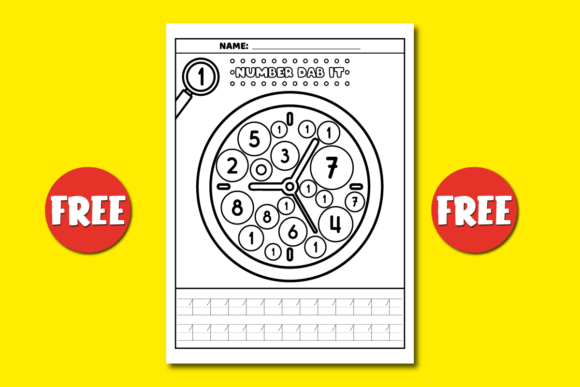
Or imagine a marketer supporting a back-to-school campaign for a Montessori-aligned curriculum. Instead of licensing low-res clipart, they use the same base file to produce back to school dotting activities, where each letter is converted into a dot-to-dot sequence—reinforcing letter shape while building number sense. The AI editability allows them to add tactile texture overlays (e.g., sandpaper-effect gradients) for multisensory print versions, then export clean vectors for web banners and email headers.
Why Professionals Are Prioritizing Editable, Pedagogically Grounded Assets
Consumers—and institutional buyers—are no longer satisfied with decorative or superficially educational content. Parents scrutinize learning claims; teachers assess alignment with state standards (e.g., CCSS ELA RL.K.1); district procurement teams evaluate accessibility compliance (WCAG contrast ratios, screen-reader compatibility of alt-text in exported formats). An alphabet recognition games for preschoolers asset must now demonstrate intentionality—not just in appearance, but in architecture.
This is where Alphabet Handwriting a Letter Tracing differentiates itself. Its design anticipates usage across contexts: the 8.5 x 11-inch page size meets standard printer constraints while preserving ample margin space for binding or laminating; the vector foundation ensures crisp rendering on classroom projectors and mobile devices alike; and its modular structure supports rapid localization—critical for creators serving global markets or dual-language programs.
Moreover, it reflects a broader industry pivot toward asset longevity. Rather than producing disposable seasonal printables, forward-looking creators invest in foundational files that serve multiple product lines: a single letter-tracing base can feed a physical workbook, a companion app’s tracing engine, and a YouTube tutorial’s on-screen annotation layer—all maintained from one source.
Designing for Cognitive Load—and Creative Freedom
Research in educational psychology consistently shows that young learners benefit most from materials that reduce extraneous cognitive load—removing visual noise, maintaining consistent spatial relationships, and sequencing tasks progressively. This file honors those principles: no decorative borders compete with letter forms; baseline alignment is uniform across all 26 letters; and uppercase/lowercase pairings follow orthographic frequency (e.g., “a” appears before “A” in early sets, matching how children first encounter letters in environmental print).
For the professional, that same clarity translates into workflow efficiency. Layers are named descriptively (“Guide_Arrows”, “Tracing_Path_a”, “Color_Zone_Lowercase”). Text remains live and editable—no outlines—so font substitution is instant. And because it’s built in industry-standard AI, it integrates natively with automation tools like scripting plugins for batch-exporting individual letters or generating high-contrast versions for visually impaired learners.
Strategic Implications for Creators and Marketers
Adopting editable, pedagogically informed assets like this isn’t just about saving time—it’s about positioning. In saturated marketplaces (Etsy, Teachers Pay Teachers, even Shopify storefronts for educational brands), buyers increasingly filter by tags like “editable,” “Montessori-aligned,” “OT-approved,” and “print-ready.” A resource tagged with those terms sees measurable uplift in organic search visibility and conversion rates—not because of keyword stuffing, but because it answers precise user intent: “I need a tracing worksheet I can adapt for my student with dyspraxia” or “I’m building a bilingual ABC app and need scalable letter vectors.”
That specificity also enables smarter segmentation. A marketer promoting identifying letter for child resources can A/B test messaging around “therapist-vetted motor pathways” versus “classroom-tested differentiation”—then refine offers based on which resonates with occupational therapists versus preschool directors.
Conclusion: Where Craft Meets Context
Alphabet Handwriting a Letter Tracing exemplifies a maturing sector—one where design excellence, developmental science, and business pragmatism converge. It is not merely a tool for teaching letters; it is infrastructure for scalable, empathetic, and intelligent early learning creation. Whether you’re iterating on alphabet recognition games for preschoolers, expanding into school coloring pages for preschooler bundles, or architecting a full coloring book for children ages 3–5 series, this editable, 8.5 x 11-inch PDF represents a strategic starting point: efficient to deploy, rigorous in intent, and resilient across changing platforms and pedagogies.
In an era where attention is scarce and expectations are exacting, the most valuable assets aren’t the flashiest—they’re the most thoughtful, adaptable, and grounded in real human development. That’s the quiet power of a well-designed tracing file. And that’s why professionals who build for learning are choosing depth over decoration, editability over static output, and intention over inertia.