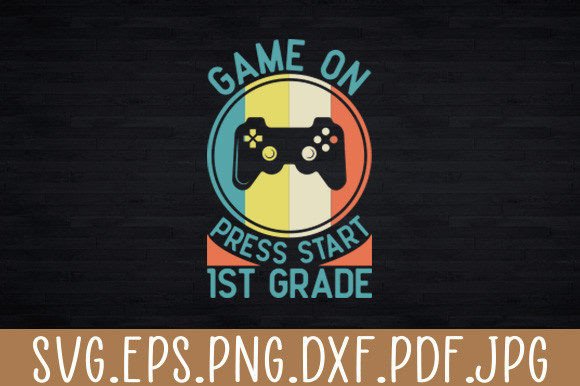
Vintage Game on Press Start 1st Grade: Where Nostalgic Design Meets Modern Digital Craftsmanship
For creative professionals, educators launching themed classroom campaigns, small-business owners building cohesive back-to-school product lines, and freelance designers crafting custom merchandise—Vintage Game on Press Start 1st Grade isn’t just another digital cut file. It’s a deliberate convergence of retro aesthetic intelligence, scalable production readiness, and contextual relevance in today’s fast-evolving creative economy.
A Design Language Rooted in Shared Cultural Memory
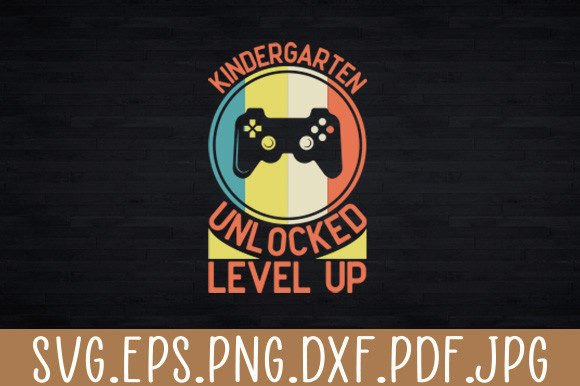
Vintage Game on Press Start 1st Grade draws from a deeply resonant visual lexicon: pixel-perfect typography, CRT-screen-inspired gradients, arcade-style button motifs, and the unmistakable “press start” prompt that once signaled entry into a new world. But this isn’t nostalgia for nostalgia’s sake. The design intentionally bridges generational touchpoints—Gen X and Millennial educators who grew up with early home consoles, Gen Z students fluent in meme culture and retro-modern aesthetics, and Alpha learners already absorbing visual language through interactive digital environments.
What makes Vintage Game on Press Start 1st Grade Gamer Back To School especially potent is its dual function: it operates as both a thematic anchor and a production-ready asset. Unlike generic school-themed graphics, it embeds narrative intention—transforming routine back-to-school preparation into an experience with emotional texture. A first-grade welcome banner isn’t just informative; it becomes an invitation to play, learn, and belong.
Why This Resonates Now: Shifting Expectations in Education and Entrepreneurship
Educators are no longer limited to pre-packaged curriculum kits or big-box store supplies. With rising demand for differentiated, culturally responsive, and visually engaging learning environments, teachers increasingly act as curators, designers, and micro-entrepreneurs—creating classroom materials, selling printables on Etsy or Teachers Pay Teachers, or launching branded learning tools. Similarly, small studios and solopreneurs building school-year product lines (think personalized lunchboxes, vinyl-decorated notebooks, or limited-run apparel) need assets that scale across formats without sacrificing authenticity.
This is where Vintage Game on Press Start 1st Grade delivers strategic value. It’s not merely decorative—it’s interoperable infrastructure. The inclusion of SVG, DXF, EPS, PDF, and PNG files in a single, well-organized folder reflects an understanding of real-world workflow diversity. A Cricut Maker user cutting iron-on for teacher appreciation T-shirts needs SVG precision. A Silhouette Cameo operator producing layered paper crafts benefits from clean DXF paths. A print-on-demand partner integrating the design into mug mockups relies on high-resolution PNG transparency. And a graphic designer adapting the motif for a school newsletter or digital announcement leans on the vector-based EPS or PDF for crisp scalability.
Designed for Real Machines, Real Workflows
The note—“File to be used with best die cutting machines such as Cricut Explore, Cricut Maker, Silhouette Cameo, and other machines compatible with SVG files”—isn’t boilerplate. It signals respect for technical literacy among users. Professionals know compatibility isn’t assumed: software versions matter, layer grouping affects cut order, and raster vs. vector fidelity impacts material yield. By delivering five distinct, purpose-built file types in one ZIP—and organizing them within a logically named folder—the creator removes friction at the point of implementation.
This level of technical foresight aligns with broader industry movement toward “production-native design.” In contrast to static image libraries or one-format downloads, modern creative assets are built for deployment—not display. That shift is accelerating across education technology, print-on-demand ecosystems, and even corporate L&D departments adopting DIY visual toolkits for internal training launches.
Beyond the Classroom: Expanding the Use Case Horizon
While “Back to School” anchors the theme, the versatility of Vintage Game on Press Start 1st Grade Gamer Back To School extends far beyond August planning. Consider these practical, revenue-aligned applications:
- Merchandising for EdTech Startups: Launching a new literacy app? Use the motif on launch-day swag—vinyl decals for laptop stickers, tea towels for team gifting, or art prints for office walls—to reinforce brand personality rooted in playful pedagogy.
- Small-Business Brand Extensions: A local tutoring center can integrate the design into seasonal email headers, social media banners, and physical signage—creating continuity across digital and brick-and-mortar touchpoints.
- Freelance Designer Toolkits: Designers offering “school branding packages” for private academies or homeschool collectives can license or adapt this file as a foundational element—saving hours on custom illustration while ensuring stylistic cohesion.
- Community Engagement Campaigns: Libraries running summer reading programs or after-school STEM clubs use the motif on invitations, badges, and progress trackers—leveraging game mechanics (levels, achievements) to boost participation without reinventing visual language.
Each use case shares a common thread: efficiency without compromise. The design doesn’t ask users to choose between speed and quality, mass appeal and specificity, or digital convenience and tactile impact. It supports all three—simultaneously.
Contextual Intelligence in Asset Development
What separates Vintage Game on Press Start 1st Grade from commoditized clipart is its embedded contextual intelligence. The “1st Grade” specification isn’t arbitrary—it informs proportion, color saturation, and visual weight. Letters are sized for early readers. Contrast ratios meet accessibility thresholds for projected displays. The “Press Start” prompt functions as both instruction and empowerment—a subtle psychological nudge aligned with growth mindset principles gaining traction in evidence-informed education practice.
Moreover, the vintage gaming motif avoids dated clichés. There are no overt references to specific consoles or copyrighted characters—making it legally safe for commercial reuse. Instead, it evokes era-appropriate design grammar: chunky serifs, limited palettes, and intentional “imperfections” (like scan-line textures in PNG variants) that signal authenticity without triggering licensing risk.
Future-Proofing Through Format Agility
In an era where hardware evolves rapidly—from Cricut’s adaptive smart-cut algorithms to Silhouette’s cloud-based design sync—the longevity of a digital asset depends less on trend alignment and more on format resilience. The inclusion of EPS ensures backward compatibility with legacy Adobe workflows. PDF enables immediate printing or PDF-based sublimation prep. PNG files with transparent backgrounds support rapid integration into Canva, Figma, or PowerPoint—tools now standard in educator and marketer toolkits.
This isn’t about supporting every machine ever made. It’s about supporting the ones professionals actually use—today and next year. And by packaging everything in a single, clearly labeled ZIP with intuitive folder structure, the creator anticipates how users manage digital assets at scale: drag, extract, deploy. No renaming. No hunting for hidden layers. No version confusion.
Conclusion: A Small File with Strategic Weight
Vintage Game on Press Start 1st Grade Gamer Back To School exemplifies how seemingly narrow digital products operate at the intersection of cultural resonance, technical precision, and operational empathy. It meets creators where they are—in front of cutting machines, inside design software, managing tight deadlines and tighter budgets—while quietly enabling higher-order goals: stronger student engagement, differentiated brand expression, and scalable creative output.
As schools, studios, and startups continue prioritizing authenticity over automation and intention over iteration, assets like this won’t just remain relevant—they’ll become benchmarks. Not because they’re flashy, but because they’re functional. Not because they’re novel, but because they’re thoughtful. And not because they promise transformation—but because they deliver it, one precise cut, one consistent color, one perfectly timed “Press Start” at a time.