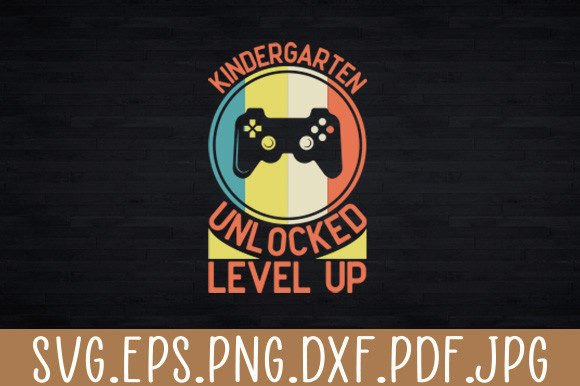
Kindergarten Unlocked Level Up Gamer Boy: A Versatile Digital Design Resource for Creative Educators and Makers
Designing engaging, age-appropriate classroom materials—especially for early learners—requires more than just visual appeal. It demands intentionality: alignment with developmental milestones, sensitivity to inclusive representation, and adaptability across physical and digital learning environments. The Kindergarten Unlocked Level Up Gamer Boy digital file set meets that need with precision. It’s not merely clip art—it’s a thoughtfully structured, multi-format design asset engineered for real-world implementation in education, small business, and hands-on crafting.
What Makes This Design Distinctively Functional?
Unlike generic cartoon graphics, the Kindergarten Unlocked Level Up Gamer Boy embodies a specific pedagogical and aesthetic ethos. The character combines familiar gaming motifs—pixel-inspired accents, a subtle controller icon on the backpack, a confident yet approachable stance—with kindergarten-appropriate simplicity: rounded edges, high-contrast outlines, and expressive but non-distracting facial features. This balance supports visual processing for young children while resonating with older siblings or tech-savvy educators.
The design is delivered as an instant-download digital file—not a physical product—and built from the ground up for compatibility with widely used cutting machines. That means no waiting, no shipping delays, and immediate integration into lesson planning or production workflows. But its utility extends far beyond vinyl decals or paper cutouts. Its strength lies in format flexibility and intentional layering.
Inside the Download: Five Formats, One Cohesive Asset
The package arrives as a single ZIP file containing one organized folder with five distinct file types: SVG, DXF, EPS, PDF, and PNG. Each serves a distinct technical purpose—and each is optimized for its intended use case.
- SVG (Scalable Vector Graphics): The go-to format for Cricut Design Space and Silhouette Studio. Preserves clean, crisp edges at any scale and supports layer-based color separation—ideal when cutting multiple vinyl colors or applying heat transfer vinyl in stages.
- DXF (Drawing Exchange Format): Universally supported by professional-grade cutting software, including older versions of Silhouette Studio and third-party CAM tools. Essential for users working in mixed-machine environments or those requiring precise line-based vector paths.
- EPS (Encapsulated PostScript): A legacy vector standard still preferred by some print shops and graphic designers using Adobe Illustrator. Offers full editability and embeddable fonts—valuable when adapting the design for school newsletters or printed handouts.
- PDF: Designed for both viewing and printing. Includes embedded crop marks and bleed guides where appropriate, making it suitable for DIY laminated flashcards, bulletin board sets, or scaled classroom posters without needing specialized software.
- PNG: High-resolution raster files with transparent backgrounds. Used directly in Google Slides, Canva, Seesaw, or PowerPoint for interactive digital lessons—no tracing or background removal required.
This multi-format structure eliminates format-related friction. A special education teacher preparing tactile learning cards can use the SVG in Cricut Design Space to cut textured felt layers. A PTA volunteer designing a “Back to School Night” banner might import the EPS into Illustrator for layout refinement. A homeschool parent building a reward chart can drag the PNG straight into a free Canva template. Each path is equally viable—and equally supported.
Real-World Applications Across Contexts
The Kindergarten Unlocked Level Up Gamer Boys Back To School variation expands the utility further, introducing school-readiness symbolism—backpacks, apples, pencils—without compromising the core gamer identity. Together, these designs serve diverse needs across sectors:
Educational Settings
In classrooms, these files support differentiated instruction. Teachers use the SVG to create durable, repositionable name tags with QR codes linking to student portfolios. The PNG version appears in morning meeting slides as part of a “Level Up Your Learning” growth mindset routine—where students earn digital badges that mirror the visual language of the design. For occupational therapy sessions, the EPS file allows therapists to adjust stroke width and simplify shapes for fine-motor tracing worksheets.
Small Business & Entrepreneurial Use
Micro-businesses serving families—such as boutique preschool supply shops, custom sticker vendors, or educational toy makers—leverage the DXF and SVG files to produce limited-run merchandise. A local maker might cut the design from biodegradable kraft paper to create eco-friendly “First Day of Kindergarten” gift tags. Another uses the PDF to generate letterpress-style invitations for a “Gamer-Themed Graduation Ceremony” for rising first graders—blending playfulness with milestone recognition.
Crafting & Home Integration
Hobbyists integrate the design into daily life: heat-transfer vinyl versions on reusable lunch bags, sublimation-printed tea towels for classroom snack stations, or embossed leather keychains for student helpers. Because all files are layered and ungrouped, users can isolate elements—for example, removing the backpack icon to focus solely on the character’s face for emotion-recognition flashcards.
Technical Considerations for Reliable Use
While the files are designed for broad compatibility, successful implementation depends on user awareness—not software limitations. First, machine readiness matters: the Kindergarten Unlocked Level Up Gamer Boy files assume access to a compatible cutting platform (Cricut Explore Air 2 or newer, Cricut Maker series, Silhouette Cameo 4 or Portrait 3, or similar) and current firmware. Outdated software may misinterpret embedded layers or transparency settings, particularly in complex SVGs.
Second, material selection influences outcome. The design’s clean lines translate well to permanent vinyl, iron-on HTV, cardstock, and even thin balsa wood—but not all formats behave identically across substrates. For instance, the DXF may require manual node adjustment when cutting intricate details from thicker chipboard, whereas the SVG handles auto-weeding more predictably in vinyl applications.
Third, licensing is intentionally permissive yet clear: the download grants perpetual, royalty-free usage for personal, classroom, and small commercial projects (up to 200 physical units per design). It does not permit resale of the digital file itself, mass manufacturing, or incorporation into editable templates sold to others—a distinction critical for Etsy sellers and curriculum developers alike.
Why Format Diversity Matters Beyond Convenience
At surface level, offering five file types seems like redundancy. In practice, it reflects deeper design literacy. SVG enables dynamic interactivity; DXF ensures mechanical fidelity; EPS preserves typographic integrity; PDF guarantees accessibility without software; PNG delivers immediacy. Choosing one over another isn’t about preference—it’s about matching technical requirements to pedagogical or production goals.
Consider a district-wide initiative to build “Growth Mindset Kits” for kindergarten teachers. The curriculum team distributes the PDF for printing standardized anchor charts, shares the PNG for interactive whiteboard activities, and provides the SVG to school-based makerspaces for custom manipulatives. That cross-platform coherence—rooted in a single, unified source file—is what transforms a graphic into a scalable educational tool.
Adaptability as a Core Feature
The Kindergarten Unlocked Level Up Gamer Boy isn’t static. Its layered construction invites modification: swapping colors to reflect classroom themes (e.g., blue for “Brave Choices,” green for “Growth Habits”), combining elements with other unlocked assets (like “Level Up Gamer Girl” or “Level Up Teacher” variants), or isolating components for targeted skill-building—such as using only the hands and controller icon for digital citizenship discussions.
This modularity supports Universal Design for Learning (UDL) principles. A child who struggles with abstract language may respond more readily to a tactile, cut-out version of the “Level Up” badge paired with verbal scaffolding. A neurodivergent learner might use the same design in a predictable visual schedule—printed from the PDF, laminated, and placed on a Velcro board.
Even educators unfamiliar with cutting machines benefit indirectly: the existence of high-quality, classroom-ready files lowers the barrier to creating consistent, visually coherent materials across grade levels and subjects—reinforcing identity, routine, and belonging during a pivotal developmental year.
Integrating Into Broader Creative Workflows
For professionals managing multiple projects—whether a freelance graphic designer supporting charter schools or a district media specialist curating digital resources—the Kindergarten Unlocked Level Up Gamer Boys Back To School files function as interoperable building blocks. They slot seamlessly into existing asset libraries, align with common style guides (using Pantone-approximated color palettes included in metadata), and retain scalability without pixelation—critical when repurposing a single design across social media banners, printed handouts, and physical signage.
Importantly, the files avoid over-stylization. There are no embedded shadows, gradients, or raster effects that break down at small sizes or complicate cutting. Every curve is mathematically defined; every corner has a consistent radius. That restraint isn’t minimalism for its own sake—it’s reliability engineered into the vector path.
In essence, this isn’t just a download. It’s infrastructure. A quietly powerful resource that supports intentionality—whether you’re helping a five-year-old recognize their own capacity to grow, launching a small business rooted in childhood joy, or simply making Monday morning a little more vibrant with a custom mug that says, “Level Up: Attendance Achieved.”