I Call My Students My Kids Teacher
“I call my students my kids” isn’t just a catchy phrase—it’s a heartfelt declaration many educators live by. This sentiment reflects deep commitment, empathy, and the intentional cultivation of classroom community. For math teachers especially—whose subject is often perceived as rigid or intimidating—adopting this mindset transforms how they teach, connect, and inspire. Whether it’s the first day of school, a back-to-school planning session, or even retirement reflections, I Call My Students My Kids Teacher captures a philosophy that bridges warmth and rigor, care and accountability.
What Does “I Call My Students My Kids Teacher” Really Mean?
At its core, I Call My Students My Kids Teacher represents an identity shift: from instructor to advocate, from content deliverer to relational anchor. It doesn’t mean blurring professional boundaries—it means showing up with consistency, curiosity, and compassion. These teachers remember birthdays, notice when a student hesitates before answering, adjust pacing based on emotional cues, and celebrate growth—not just correct answers. In math classrooms, where confidence gaps can widen quickly, this approach helps students feel safe enough to try, fail, revise, and succeed.
Why This Mindset Matters—Especially Now
Today’s educators face mounting challenges: learning loss recovery, rising anxiety among students, shifting expectations around social-emotional learning, and growing demands on time and energy. Many math teachers report feeling stretched thin—balancing standards-aligned instruction with individualized support, grading, data analysis, and parent communication. In that context, I Call My Students My Kids Teacher isn’t idealism—it’s strategy. Research consistently shows that strong teacher-student relationships improve engagement, attendance, persistence through difficulty, and academic outcomes—even in high-stakes subjects like algebra and geometry.
Practical Ways This Philosophy Shows Up
It starts long before the bell rings. On the first day of school, I Call My Students My Kids Teacher might mean greeting each student by name at the door with a warm smile—or handing out personalized math-themed welcome cards that say, “Welcome to our family. Let’s grow together.” It continues in how feedback is delivered (“I noticed your reasoning improved here—what helped you figure that out?”), how mistakes are framed (“This isn’t wrong—it’s information”), and how celebrations are shared (a quick shout-out during warm-ups, a sticky note on a returned quiz).
For teachers preparing for back to school, integrating this mindset means designing routines that build belonging *and* mathematical thinking: collaborative problem-solving structures, reflection journals, peer teaching opportunities, and consistent check-ins. It also means protecting time for relationship-building—like 60-second “connection chats” during independent work, or using exit tickets that ask, “What’s one thing you’re proud of today?” alongside “What’s one question you still have?”
A Thoughtful Gift That Honors the Role
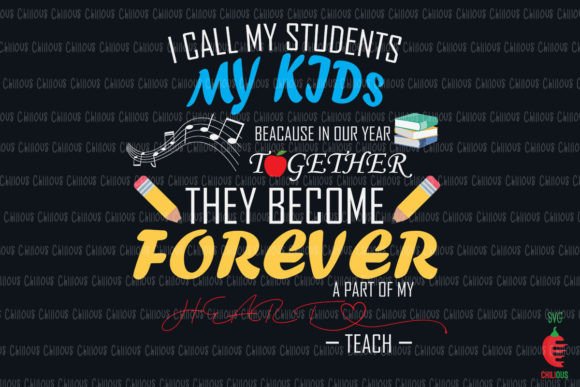
Teachers who embody I Call My Students My Kids Teacher often go unrecognized for the emotional labor they invest daily. That’s why thoughtful, meaningful gifts resonate deeply—especially those that reflect their values. A custom-designed “I Call My Students My Kids Teacher” SVG file offers more than decoration; it’s affirmation. Whether used to personalize a coffee mug for morning motivation, cut vinyl for a classroom door sign, or print on a tote bag for parent-teacher conferences, this design celebrates identity, not just occupation.
The included digital bundle—SVG, PNG, DXF, and EPS files, all with transparent backgrounds and pre-sized dimensions—makes implementation seamless. The SVG works instantly in Cricut Design Space or Silhouette Studio. The high-resolution PNG is ready for printing without resizing hassles. And because every file supports scalability and clarity, it maintains professionalism whether applied to a water bottle, notebook, or bulletin board.
Who Benefits—and How They Use It Differently
Active Teachers: Use the design to reinforce classroom culture—adding it to welcome signs, student award certificates, or even editable digital slides (“Our Math Family Rules”). Some print it on reusable stickers for student notebooks, pairing it with growth-mindset prompts.
Retired Educators: This phrase carries emotional weight after decades of service. Retirees often display the design in home offices, on memory boards, or as part of farewell gifts—a visual tribute to legacy and love.
Colleagues & Administrators: Give it as part of a new-teacher welcome kit or as recognition during staff appreciation events. It signals respect for relational pedagogy—not just lesson plans.
Parents & Supporters: Print it on a canvas or frame it as a thank-you gift. It tells the teacher, “We see how much you care—not just about math, but about *them*.”
More Than a Saying—A Framework for Impact
Calling students “my kids” isn’t about erasing boundaries—it’s about honoring humanity within structure. In math education, where procedural fluency and conceptual understanding must coexist, this mindset creates space for both. When a student says, “I’m just not a math person,” an I Call My Students My Kids Teacher responds with patience, evidence of past success, and targeted scaffolding—not dismissal.
That’s why this phrase belongs in professional development conversations, mentorship programs, and hiring rubrics. Schools that value relational teaching attract and retain educators who stay not just for curriculum or pay, but because they believe in the people they serve.
Getting Started—Simple, Sustainable Steps
You don’t need a full rebrand to embrace this philosophy. Try these low-lift, high-impact actions:
- Start small: Learn one new fact about each student in the first week—favorite snack, pet’s name, dream vacation spot—and reference it naturally.
- Reframe language: Swap “You need to…” with “Let’s figure this out together.” Replace “That’s incorrect” with “Tell me how you got there—I want to understand your thinking.”
- Make space for voice: Use quick polls, anonymous question boxes, or “fist-to-five” check-ins to gauge not just understanding—but comfort level and confidence.
- Protect your energy: Relational teaching is sustainable only when educators feel supported. Prioritize collaboration over isolation, seek coaching, and accept help.
And if you’re looking for a tangible way to honor or express this belief—whether for yourself or someone who lives it—the I Call My Students My Kids Teacher digital design bundle offers flexibility, quality, and heart. It’s more than decor. It’s a quiet nod to the profound truth that great math teaching begins not with equations—but with empathy.